
Orthodontic wire design plays an important role in creating precise and well-fitting removable orthodontic appliances. As digital manufacturing continues to advance, dental laboratories are increasingly adopting automated solutions to improve accuracy and production efficiency. We at Riton focus on providing advanced orthodontic manufacturing equipment that helps professionals achieve consistent results. As one of the experienced wire bending machine manufacturers, we develop intelligent solutions that support modern dental production, including our automatic wire bending machine designed for high-precision orthodontic wire forming.
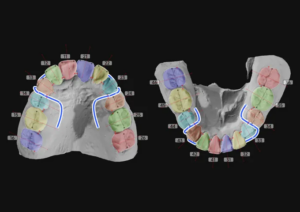
Step 1: Understand Wire Requirements and Application Needs
The first step in designing orthodontic wires is identifying the specific requirements of the appliance. Different removable orthodontic appliances require different wire shapes, diameters, and bending structures. Manufacturers need to consider factors such as material properties, wire thickness, and final application performance before starting the bending process.
Our WBM-V2 automatic wire bending machine is designed to handle a wide range of orthodontic wire applications. It can bend steel wires with diameters ranging from 0.5mm to 1.2mm, making it suitable for producing various types of removable orthodontic appliances. With advanced intelligence and precision bending capabilities, the machine helps dental professionals create reliable wire structures with improved consistency.
Step 2: Create Accurate Wire Designs and Optimize Bending Parameters
After determining the application requirements, the next step is creating an accurate wire design. Digital design preparation allows manufacturers to define bending angles, curves, and structural details before production. This reduces manual adjustment requirements and improves manufacturing efficiency.
A professional automatic wire bending machine provides better control over complex designs. The Riton WBM-V2 delivers extreme bending capability by completing standard structural components, such as hyperbolic labial bows, in less than 60 seconds. It also provides dual assurance to maintain final product bending angle deviation within <±0.5°.
As companies evaluate different wire bending machine manufacturers, precision and repeatability are critical factors. Advanced equipment should not only complete basic bends but also manage complex shapes with stable performance. The WBM-V2 achieves a convergence angle of 10°, with an arrowhead tip radius of only 0.9mm and an inner minimum forming clearance of 1.3mm. These parameters support the formation of smooth arcs and small arrowhead clasps for premolars.
Step 3: Verify Quality and Improve Production Efficiency
The final step is testing and quality verification. Consistent inspection helps that each orthodontic wire meets design requirements and provides reliable performance during clinical applications. Automated bending technology allows laboratories to reduce production variations while maintaining high standards.
At Riton, we understand that dental businesses need equipment that supports consistent manufacturing workflows. Our automatic wire bending machine combines intelligent operation, precision control, and efficient production to support orthodontic laboratories. We continue to work as one of the trusted wire bending machine manufacturers by delivering solutions that meet the evolving needs of digital dentistry.
Advancing Orthodontic Manufacturing with Riton
Designing orthodontic wires requires accuracy, efficiency, and advanced technology. By combining digital design methods with a high-performance automatic wire bending machine, dental manufacturers can improve productivity and achieve better results. With the WBM-V2, Riton provides a reliable solution for precise orthodontic wire production. As professional wire bending machine manufacturers, we remain committed to helping dental companies enhance their manufacturing processes and move toward smarter digital production.