Dental laboratories are increasingly adopting metal additive manufacturing to produce customized restorations and frameworks. However, selecting a metal 3D printer for dental production requires more than deciding whether DMLS or SLM is the better option. These technologies have different historical definitions and processing approaches, but the final production results depend on how the printing process, machine configuration, materials, and workflow work together.
For dental laboratories, the more practical question is not simply which technology name appears on a machine specification sheet. Instead, laboratories should evaluate whether the system can meet their requirements for accuracy, density, mechanical performance, productivity, and long-term production stability. Factors such as laser configuration, powder management, build parameters, and process monitoring should all be considered when choosing a suitable metal additive manufacturing solution.
DMLS vs. SLM: Understanding the Technology Differences for Dental Applications
DMLS and SLM are both based on laser powder bed fusion technology, where metal components are produced layer by layer from digital designs. Although the two terms are often compared together, they originally described different approaches to processing metal powder.
DMLS traditionally refers to a process where metal powder particles are bonded through laser-based processing, while SLM generally describes a process that fully melts metal powder to create a dense metal structure. However, modern metal additive manufacturing equipment does not always follow these historical definitions strictly, and manufacturers may use these terms differently depending on their technologies and applications.
For dental laboratories, the more important consideration is how the actual printing process performs in production. Factors such as part density, dimensional accuracy, surface quality, mechanical properties, and repeatability depend not only on the technology category but also on machine design, material parameters, and process optimization.
Laser power, scanning strategy, layer thickness, and thermal management all influence the final results. Therefore, laboratories should avoid evaluating equipment only by whether it is labelled as DMLS or SLM. A complete understanding of the machine’s capabilities is necessary to determine whether it fits specific dental applications.
What Should Dental Labs Evaluate Beyond the DMLS or SLM Label?
Production requirements should be the starting point when selecting a metal 3D printer. Different dental applications may require different combinations of accuracy, productivity, material compatibility, and process stability. A laboratory producing complex frameworks may prioritize mechanical consistency and precision, while another facility may focus more on throughput and workflow efficiency.
Build parameters are an important part of this evaluation. Layer thickness, laser settings, scanning speed, and build strategy influence both production efficiency and final part quality. However, these parameters should always be considered together with the machine architecture because different systems may achieve different results even under similar settings.
Material compatibility is another essential factor. A dental metal 3D printer should support appropriate dental alloys and provide validated processing conditions for those materials. The interaction between powder characteristics, machine configuration, and process parameters determines whether a system can consistently produce reliable dental components.
When comparing solutions from top metal 3D printing companies, dental laboratories should therefore focus on complete production capabilities rather than technology labels alone. A professional supplier should help customers evaluate equipment according to their application requirements instead of simply promoting one manufacturing method.
How Production Requirements Influence Metal 3D Printer Selection
The decision to choose a higher-capacity or more advanced system should be based on actual production goals. For laboratories handling larger production volumes, complex geometries, or centralized manufacturing workflows, factors such as build volume, production efficiency, automation level, and process reliability become increasingly important.
However, a larger machine is not automatically the right choice for every dental laboratory. The ideal system should balance production needs with investment considerations, material requirements, and available workflow resources.
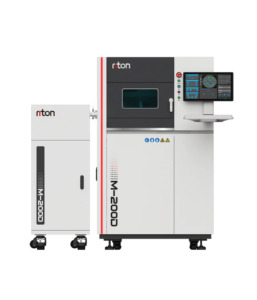
A professional Riton SLM machine provides a metal additive manufacturing option for laboratories evaluating different production levels. Instead of focusing only on the technology category, laboratories can compare equipment according to build requirements, supported materials, productivity expectations, and operational needs.
For buyers researching top metal 3D printing companies, understanding how equipment configuration matches production objectives is an important step in reducing uncertainty during the purchasing process. The right supplier should provide not only hardware but also technical support and application guidance.
Choosing the Right Production Configuration for Dental Metal Printing
We believe the best purchasing decision starts with production requirements rather than the technology label alone. DMLS and SLM each have their own characteristics, and neither should be considered universally suitable or unsuitable for dental applications.
Instead of focusing only on whether a machine is called a DMLS or SLM system, laboratories should compare the complete production solution. Important factors include printing principles, laser configuration, powder handling, build parameters, process monitoring, and application experience.
At Riton, our MLAB SLM system is designed for dental laboratories seeking a compact metal additive manufacturing solution. The system features a compact 0.36 m² footprint, a 250 W fiber laser, and a 20–60 μm layer thickness range, providing a balance between professional production capability and efficient workspace utilization.
By combining appropriate machine configuration with validated materials and optimized workflows, dental laboratories can build a more reliable digital production process.
A Smarter Path Toward Digital Metal Production
Choosing between DMLS and SLM requires a broader evaluation than comparing technology names. Both approaches have contributed to the development of metal additive manufacturing, but their practical value depends on how well the system matches the intended application.
For dental laboratories, the key is to evaluate the complete manufacturing solution, including printing technology, machine structure, materials, process control, and production objectives. Working with experienced top metal 3D printing companies can help laboratories identify equipment that fits their current needs while supporting future growth.
As a provider of professional metal additive manufacturing solutions, we offer systems designed around different production requirements. Our Riton SLM machine combines a compact 0.36 m² footprint, 250 W fiber laser, and 20–60 μm layer thickness range to support dental-oriented metal printing applications. By looking beyond DMLS vs SLM labels and focusing on real production performance, laboratories can make more informed decisions when expanding digital metal manufacturing capabilities.