Purchasing an industrial metal 3D printer requires more than comparing machine prices or basic specifications. Dental laboratories and manufacturers need to understand which features influence production efficiency, workflow stability, and long-term usability.
Instead of just asking if a metal 3d printer for sale can print metal parts, buyers must prioritize whether the hardware supports repeatable manufacturing and suits their specific application needs.
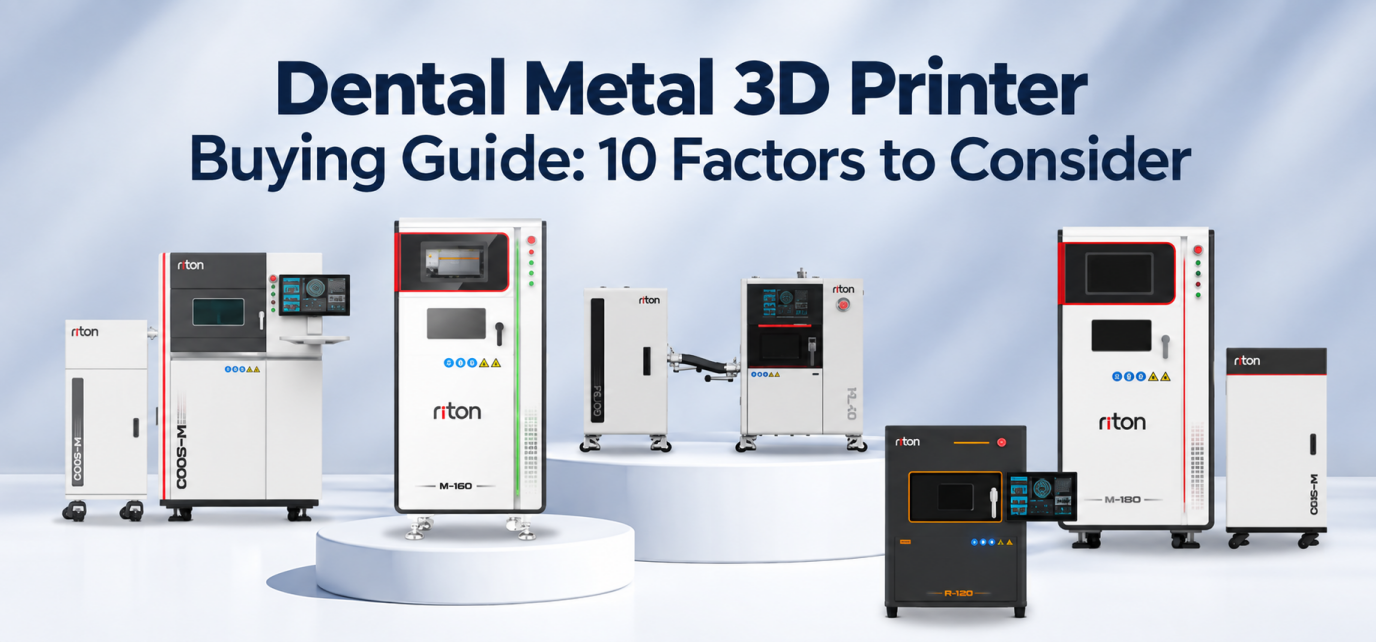
We are Riton, and we develop metal additive manufacturing solutions designed for professional production environments. Understanding the connection between machine features and practical benefits helps buyers make more informed equipment decisions.
Which Industrial Metal 3D Printer Features Matter Before Purchase?
An industrial metal 3D printer should be evaluated according to the manufacturing challenges it needs to solve. Different production environments have different priorities, including output requirements, workflow structure, material needs, and available operating space.
One essential feature is the printing technology itself. Selective laser melting (SLM) enables manufacturers to produce metal components directly from digital designs by selectively melting metal powder layer by layer. This technology is widely used in industries where complex structures and digital production processes are required.
The build system is another factor that affects daily operations. A suitable printing platform should match the expected production workload. Dental laboratories producing multiple restorations or frameworks need equipment that can handle planned production schedules efficiently.
Equipment control and operation processes also influence user experience. Clear monitoring systems and organized workflows can help operators manage production tasks more effectively. When comparing metal 3d printer manufacturers, buyers should consider how easily the equipment can be integrated into existing manufacturing procedures.
The right features are not always the ones with the highest numbers. They are the features that directly support the intended production environment.
How Printing Performance Features Influence Manufacturing Results
Examining how machine characteristics affect manufacturing results makes the benefits of an industrial metal 3D printer easier to see.
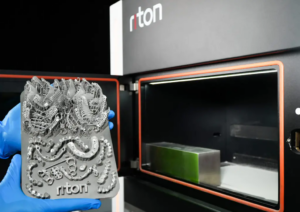
Production efficiency is one important factor. A printer designed for professional applications should allow manufacturers to optimize production cycles and reduce unnecessary interruptions. The M-200D from Riton is designed as an SLM metal 3D printing system for dental applications, with product information indicating a production efficiency of printing 430 crowns or 35 partial frameworks in 5.5 hours.
Another important feature is the ability to maintain a stable printing process. Metal additive manufacturing requires controlled conditions because variations during printing can influence final component results. Consistent machine operation helps manufacturers establish repeatable production procedures.
The physical design of the equipment also affects practical use. According to the product information, the M-200D has dimensions of 1000 mm × 1650 mm × 750 mm, allowing manufacturers to evaluate whether the system can fit within their production environment.
For dental laboratories, these features provide value because they support a more organized transition from digital design files to finished metal components.
Why Workflow Integration Is a Major Benefit for Dental Metal Printing
A metal 3D printer can provide greater value when it works as part of a complete digital manufacturing workflow.
Dental production usually begins with digital scanning, CAD design, and preparation of printing data. The printer must fit naturally into this sequence so that operators can move efficiently between design, manufacturing, and finishing stages.
Workflow compatibility also affects production management. A well-integrated system can help laboratories reduce manual communication between different production steps and improve coordination between design teams and manufacturing operators.
The M-200D is designed for dental manufacturing workflows using SLM technology. Its application focus allows dental laboratories to evaluate the printer according to their specific production needs rather than treating it as a general-purpose manufacturing machine.
For buyers comparing different metal 3D printer manufacturers, workflow understanding is an important distinction. Equipment suppliers that understand dental production requirements can provide solutions that better match laboratory operations.
What Buyers Should Expect From an Industrial Metal 3D Printer Investment
An industrial metal 3D printer represents a long-term manufacturing decision. The value of the equipment depends on how effectively it supports current production while allowing room for future development.
Buyers should evaluate whether the machine matches their intended applications, production volume, and operational capabilities. A printer that meets technical requirements but does not fit the workflow may create unnecessary challenges after installation.
Supplier experience is also an important part of the investment decision. Professional guidance, technical communication, and application understanding can influence how successfully a company adopts new manufacturing technology.
When reviewing options for a metal 3D printer for sale, companies should focus on the relationship between features and outcomes. Printing technology, production efficiency, workflow integration, and equipment suitability all contribute to the overall value of the system.
We believe successful digital manufacturing depends on choosing equipment that aligns with real production goals. At Riton, we focus on connecting advanced metal printing technology with the practical needs of dental manufacturers.
The best industrial metal 3D printer is not simply the machine with the most features. It is the system that provides the right combination of production capability, workflow compatibility, and operational value. By evaluating features through the lens of actual manufacturing requirements, buyers can select equipment that supports reliable and efficient metal production.