The global metal additive manufacturing market includes manufacturers with very different technology strengths, production scales, and target industries. However, for dental laboratories, global reputation alone is not enough. The right choice depends on how well a supplier’s equipment, materials, software, production workflow, and after-sales support fit the specific needs of digital dentistry.
This distinction is particularly important because dental manufacturing is highly customized by nature. Every patient has a unique oral structure, while crowns, bridges, frameworks, and other dental components require both precision and efficient batch production. As a result, the most suitable metal AM supplier for a dental laboratory may be very different from the supplier preferred by aerospace or heavy industrial manufacturers.
For buyers building a supplier shortlist, the more useful question is not simply which companies are famous. It is which manufacturers have established metal additive manufacturing capabilities and which of them are relevant to the intended production environment. Based on that approach, we have selected ten companies worth evaluating.
10 Global Manufacturers on the Metal 3D Printing Shortlist
- EOS
EOS is one of the established names in industrial metal additive manufacturing. Its metal portfolio is based on laser powder bed fusion and covers systems intended for different production requirements.
The company serves demanding industrial applications and has developed supporting technologies around materials, process control, and production workflows. Its broad industrial positioning makes EOS an important benchmark when comparing metal AM suppliers.
- Nikon SLM Solutions
Nikon SLM Solutions specializes in metal additive manufacturing based on selective laser melting technology. Its portfolio includes systems designed around different build volumes and laser configurations.
The company is particularly relevant to buyers evaluating production-oriented metal powder bed fusion. Its technology provides a useful reference point for laboratories and manufacturers comparing multi-laser and high-throughput approaches.
- 3D Systems
3D Systems has a broad additive manufacturing portfolio covering polymers, metals, and healthcare applications. Its metal systems use Direct Metal Printing technology for producing complex components.
Dental production is also part of its additive manufacturing offering. That makes the company particularly relevant to buyers who want to compare general industrial metal printing capabilities with dedicated dental production requirements.
- Renishaw
Renishaw combines metal additive manufacturing with its wider expertise in precision engineering and metrology. Its metal systems use powder bed fusion and are offered for demanding manufacturing applications.
Healthcare is among the areas addressed by its additive manufacturing technology, including dental and maxillofacial applications. This gives Renishaw particular relevance for buyers comparing metal AM suppliers with established medical-sector experience.
- BLT
BLT is a major Chinese metal additive manufacturing company. Its portfolio focuses on metal powder bed fusion systems and related additive manufacturing solutions.
Its position in the global market makes it an important manufacturer to consider when evaluating Asian suppliers. Production scale, machine configuration, material support, and application requirements should be reviewed individually when comparing its systems with other manufacturers.
- Riton
Riton takes a different approach to metal additive manufacturing by focusing on the dental industry and building a full-process digital dental manufacturing ecosystem. Rather than positioning itself as a single-equipment supplier, Riton provides an integrated solution covering digital design, manufacturing, equipment, production workflow, and localized after-sales service.
This positioning is particularly relevant to dental laboratories, where the value of a metal 3D printer depends not only on printing performance but also on how efficiently it connects with the laboratory’s broader digital production process. Riton’s focus on dentistry reflects the highly customized nature of the industry, where each patient has a unique dental structure and production demand is characterized by continuous, repeatable orders rather than a small number of large industrial components.
- DMG MORI
DMG MORI brings additive manufacturing into a broader machine-tool portfolio. Its additive technologies include metal powder bed fusion as well as other metal deposition approaches.
This combination is relevant to manufacturers looking at additive production alongside conventional machining. For a dental laboratory, however, the evaluation should focus specifically on whether the available equipment and workflow match dental production requirements.
- TRUMPF
TRUMPF has extensive expertise in industrial laser technology and applies that background to metal additive manufacturing. Its additive portfolio addresses demanding industrial production environments.
The company is particularly relevant to organizations already familiar with industrial laser processing. Dental laboratories should distinguish this broad industrial orientation from equipment designed specifically around dental production volumes and workflows.
- AddUp
AddUp is a French additive manufacturing company focused on metal production technologies. Its portfolio includes powder bed fusion systems developed for industrial manufacturing.
The company represents another option for buyers researching European metal AM suppliers. Its position is more closely associated with industrial manufacturing than with dedicated dental laboratory equipment, so application fit remains an essential screening criterion.
- Velo3D
Velo3D is recognized for production-oriented metal additive manufacturing and laser powder bed fusion technology. Its systems are aimed at manufacturers requiring complex metal components and controlled production processes.
Like several other companies on this list, its primary market orientation is industrial. Nevertheless, its technology and manufacturing approach make it relevant to anyone conducting a comprehensive global supplier comparison.
Why the “Top 10” List Changes for Dental Buyers
A global ranking does not automatically identify the best suppliers for dental laboratories. Dental manufacturing has a fundamentally different production model from aerospace, automotive, or heavy industrial applications. Each patient presents a highly customized case, while dental laboratories need to process large numbers of relatively small, complex components with consistent quality and predictable turnaround times.
This is why the right dental lab 3d printer should be evaluated not simply by laser power or maximum build volume, but by the complete production ecosystem surrounding the machine. Material compatibility, nesting efficiency, software connectivity, batch productivity, post-processing, operator training, and localized technical support can all influence the real return on investment.
Crowns, bridges, frameworks, and other dental components are typically small and geometrically complex. Consequently, equipment selection may depend more on batch productivity, machine footprint, material compatibility, software workflow, and dental-specific production requirements than on maximum build volume.
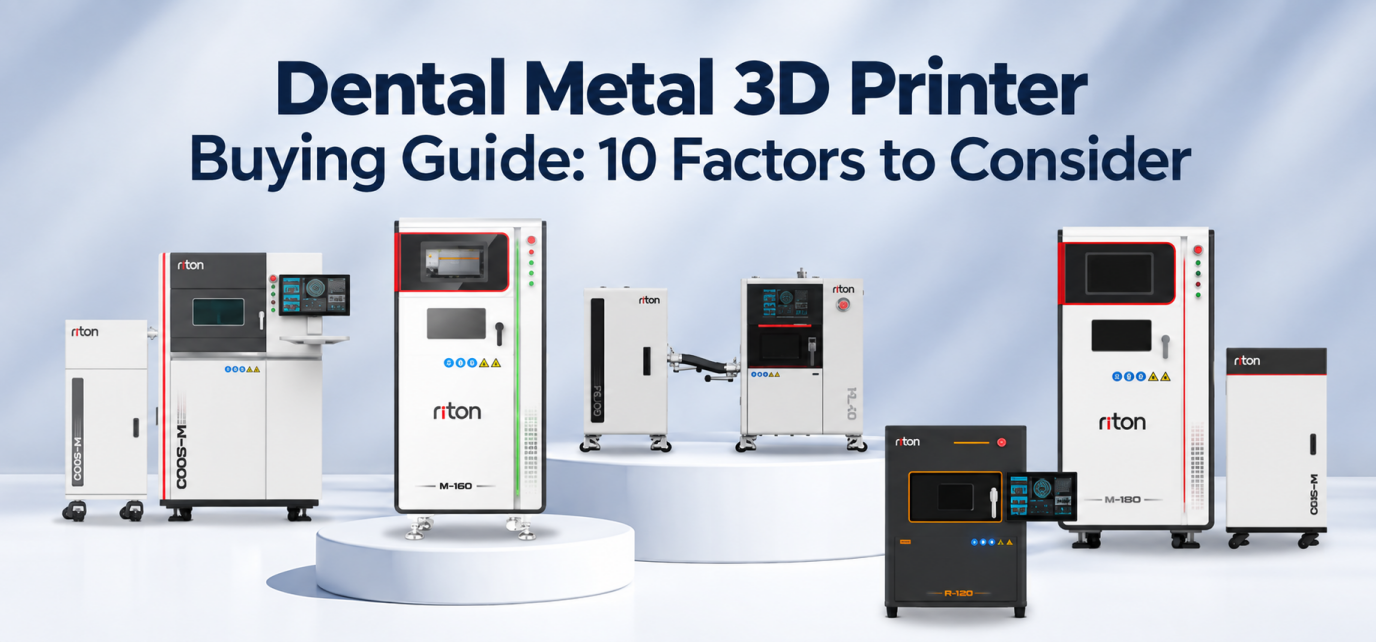
Our MLAB at Riton illustrates this application-focused design philosophy. It is a metal 3D printing system developed for dental laboratories, with a 100 × 90 mm melting area, a 250 W fiber laser, and support for CoCr and titanium alloys.
More importantly, our MLAB is positioned within Riton’s broader digital dental manufacturing ecosystem rather than as an isolated piece of hardware. This allows dental laboratories to evaluate the printer as part of an integrated production solution covering digital workflows, manufacturing, and localized service support.
According to the supplied product information, the system occupies approximately 0.36 m². Its stated fastest production conditions can produce up to 100 crowns or seven frameworks within 2.5 hours.
These specifications demonstrate why application context matters. A large industrial printer may be technically impressive but inefficient for a laboratory whose production consists mainly of relatively small dental components.
How to Compare the 10 Manufacturers for a Real Purchase
A shortlist of 3d metal printer manufacturers should be narrowed according to the actual manufacturing objective. Start by identifying the dental products or other metal components the laboratory expects to produce.
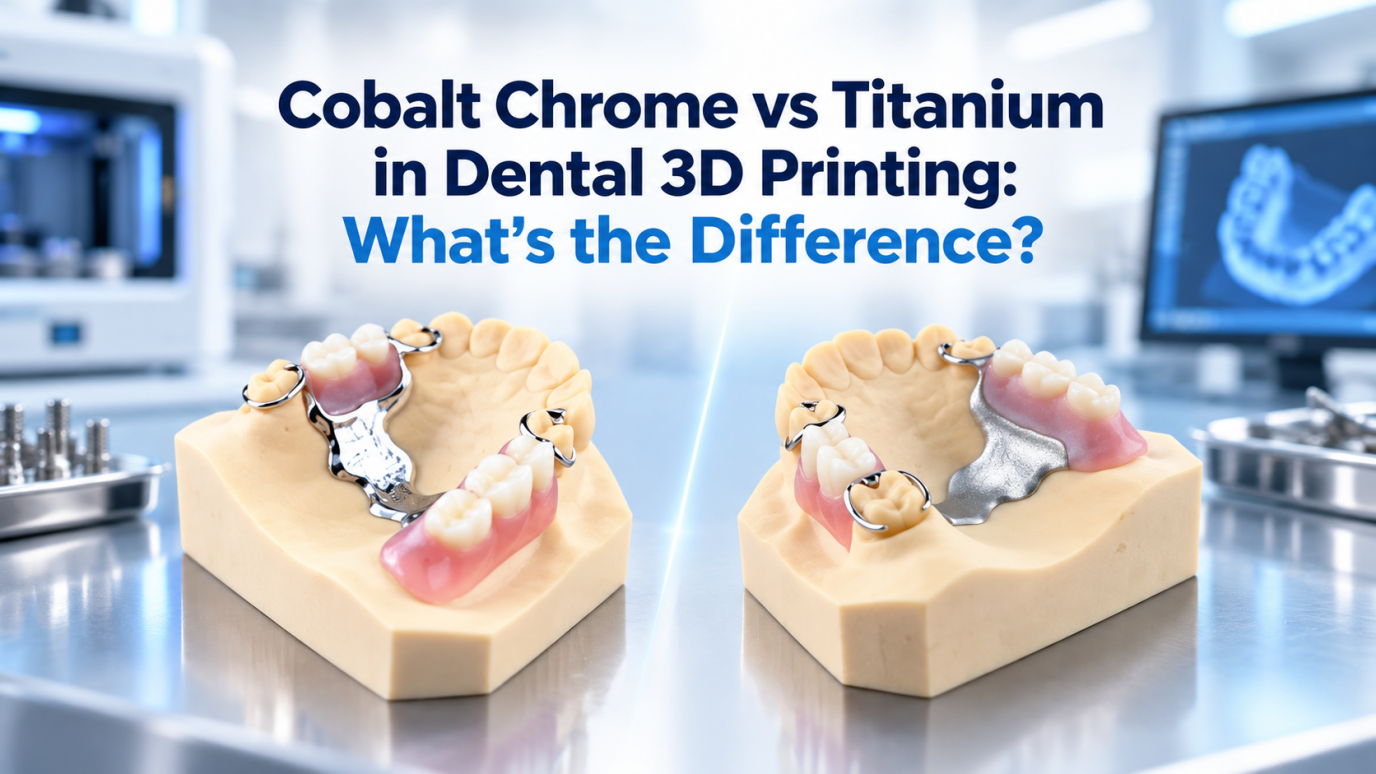
Material requirements should come next. If the intended production involves CoCr or titanium alloys, confirm that the specific printer supports the required materials and that the manufacturer provides appropriate process information.
Production capacity also deserves closer examination. Compare the expected number of parts per batch rather than relying only on nominal build volume. A compact machine can be highly productive for small dental components if its build area and process are matched to that workload.
Software and workflow integration should then be reviewed. Digital dentistry depends on a connected CAD/CAM process, so the printer should fit naturally into the laboratory’s existing production chain.
Finally, evaluate the supplier rather than only the machine. Technical support, application knowledge, installation requirements, training, consumables, software integration, post-processing, and long-term service can significantly influence the practical value of an investment. This is where an integrated solution provider can offer an advantage over a company that simply supplies printing equipment.
For dental laboratories, the supplier’s ability to understand the complete workflow—from digital design and production to finishing and local technical support—can be just as important as the printer’s specifications.
Which Type of Manufacturer Fits a Dental Laboratory?
The ten manufacturers above demonstrate how broad the global metal AM market has become. Some specialize in large-scale industrial production, while others have stronger healthcare or dental relevance.
For a dental laboratory, choosing among 3d metal printer manufacturers should therefore begin with application fit rather than global reputation alone. A system built around dental production can offer a more appropriate combination of machine size, workflow, material support, and production capacity.
Our positioning of metal 3D printing equipment is anchored in real-world application. Instead of treating dental manufacturing like general industrial additive manufacturing on a micro scale, we focus directly on the unique environment of the modern dental laboratory.
A solid shortlist should feature only those manufacturers that genuinely address your lab’s demands for material range, production volume, digital workflows, spatial limits, and finishing steps. Shifting to this framework turns a sprawling supplier search into a practical buying strategy.
When hunting for a dental lab 3d printer, the smartest choice rarely belongs to the brand with the most expansive industrial portfolio. Instead, choose the supplier whose documented systems and workflows align seamlessly with your daily production goals.