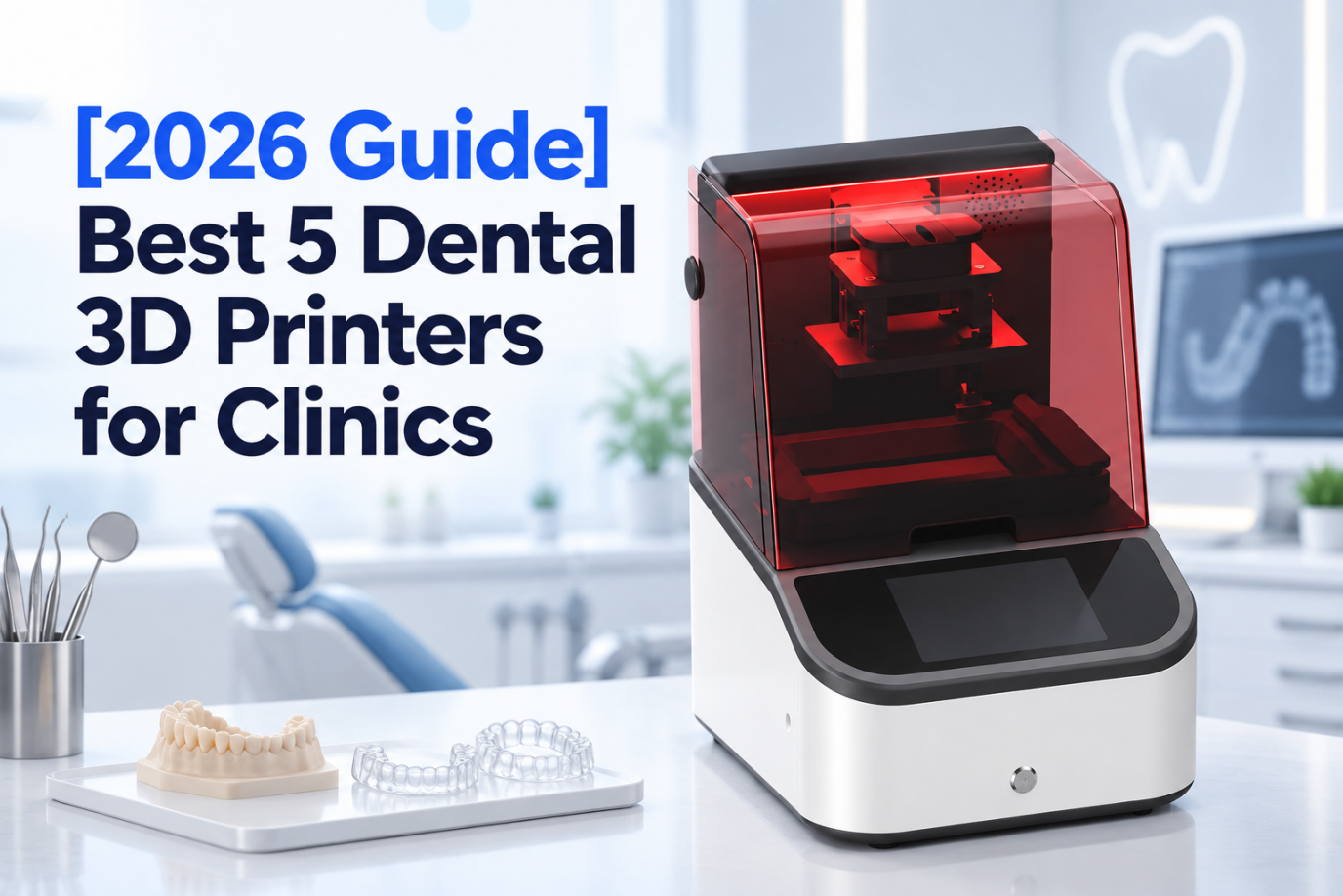
Metal 3D printing is no longer limited to large industrial production environments. Compact systems are making selective laser melting (SLM) more accessible to dental laboratories that want to produce metal components directly from digital designs. But what exactly makes a metal printer “desktop,” and how does it transform loose powder into a finished part?
We at Riton see the answer in the machine architecture and production workflow. A desktop metal printer is not simply a conventional printer placed on a smaller frame. It is a complete metal additive manufacturing system designed around a compact footprint while retaining the core principles of laser-based powder-bed fusion.
What Defines a Desktop Metal 3D Printer?
A desktop 3d metal printer uses a controlled process to build three-dimensional metal components layer by layer. In dental production, the technology is particularly relevant because digital models can be translated into physical metal restorations and frameworks without relying on conventional subtractive machining for the entire manufacturing process.
The word “desktop” mainly describes the equipment’s physical scale and installation concept. It does not mean that the machine operates like a consumer plastic printer. Metal powder, protective gas, laser energy, powder handling, and controlled processing conditions remain fundamental parts of the system.
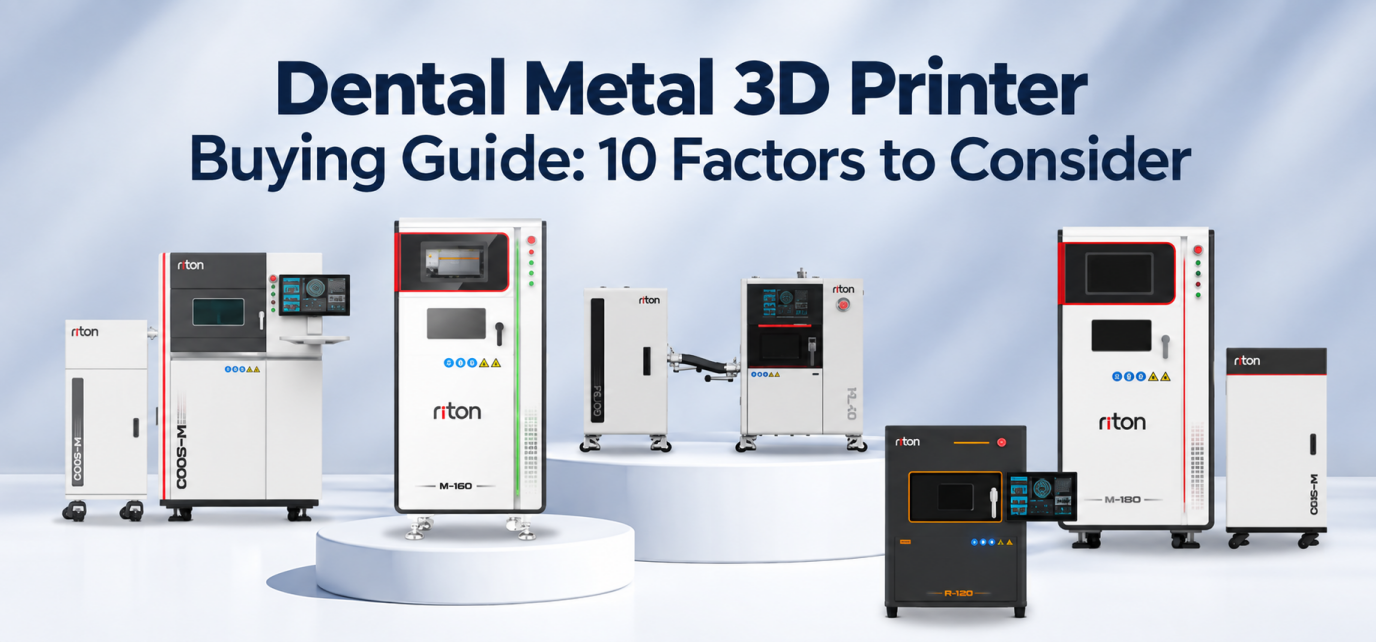
Our MLAB illustrates this compact approach. The machine measures 610 × 615 × 890 mm and occupies approximately 0.36 m². Its melting area is Φ100 × 90 mm, including the build plate.
That combination matters to laboratories where floor space is limited. A smaller machine can be incorporated into an existing production environment without automatically requiring the footprint associated with larger metal manufacturing equipment.
How the Printing Cycle Turns Powder Into a Part
The operating principle begins before the laser turns on. A digital three-dimensional model is prepared for manufacturing, positioned within the available build area, and converted into printing data. The machine then executes the planned layers.
First, a controlled layer of metal powder is spread across the build platform. At Riton, our published description of its metal printing process identifies powder application as the starting stage, followed by selective laser melting.
Next, the laser selectively melts the powder according to the digital geometry. Areas exposed to the laser become part of the solid component, while unprocessed powder remains available around the developing structure.
Layer after layer, the build platform and powder-spreading sequence continue. Each newly fused section joins the preceding layer until the complete geometry has been formed.
Our MLAB uses a single 250 W fiber laser and supports a layer thickness of 20–60 μm. Its material options include CoCr alloy and titanium alloy, while nitrogen or argon can be used as protective gas.
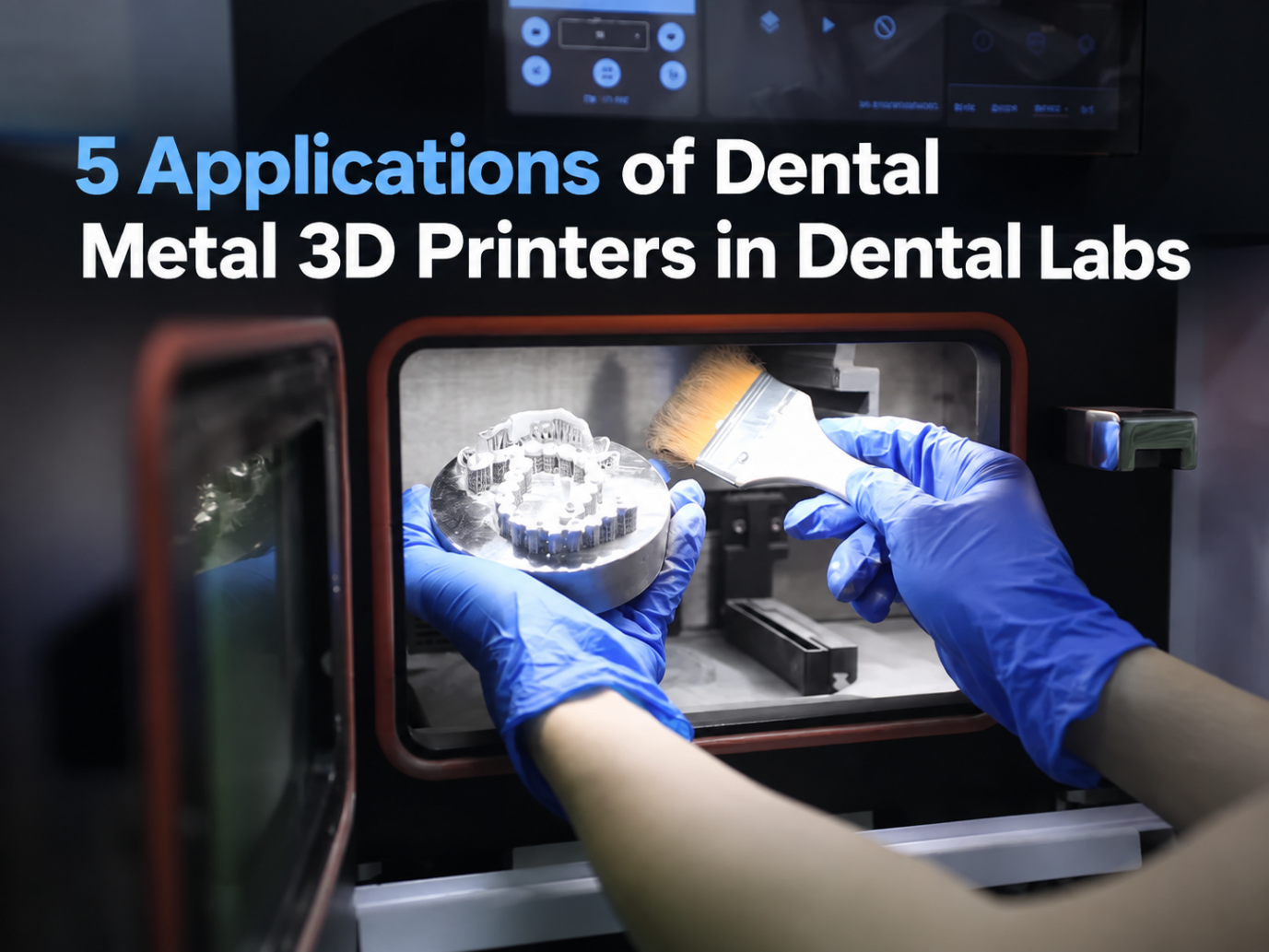
The final stage involves more than simply removing the finished part from the chamber. Powder must be handled appropriately, supports may need to be removed, and downstream operations can include cleaning, heat treatment, or surface finishing depending on the manufactured component and production requirements.
Why the Machine’s Size Matters in Dental Production
Dental laboratories often work within production areas already occupied by scanners, milling equipment, furnaces, resin printers, finishing tools, and other workflow equipment. Adding metal additive manufacturing can therefore create a facility-planning problem before it becomes a printing problem.
A compact desktop 3d metal printer addresses one part of that challenge: physical space. MLAB’s design reduces its footprint while retaining functions intended for professional metal production, including powder monitoring, an upward powder-feeding structure, and dedicated control software.
The control side is also relevant. MLAB incorporates our Riton Controller, which provides machine-status and printing-process feedback. Wireless transmission of printing data is another listed feature, supporting a more connected production setup.
Our approach is to consider compactness as part of workflow design rather than as an isolated specification. A smaller machine is valuable when its footprint, operating requirements, production capacity, and supporting equipment fit the laboratory’s overall workflow.
What the Operator Still Needs to Manage
Compact equipment does not remove the operational discipline associated with metal powder-bed fusion. Installation still requires suitable site conditions, electrical supply, gas provision, and environmental control. At Riton, our service guidance specifically identifies temperature, humidity, power, gas supply, and other installation conditions as factors that must be addressed.
Powder management is equally important. MLAB includes powder quantity monitoring and an upward powder-filling structure, while its circulation system incorporates a pre-soaked filter design intended to reduce explosion risk during filter cleaning.
Operators must also understand that printer output is only one stage of manufacturing. Successful production depends on preparing appropriate digital data, selecting compatible materials, establishing suitable printing parameters, and completing the necessary downstream processing.
The equipment therefore works best as part of a controlled digital manufacturing workflow rather than as a standalone “push-button” device.
Where Desktop Metal Printing Fits in a Digital Workflow
For a dental laboratory, the value of a desktop 3d metal printer becomes clearer when viewed as one link between digital design and physical production. CAD data can provide the geometry, while the metal printer converts that geometry into a physical component through layer-wise laser melting.
We developed MLAB around this compact production concept, with dental-oriented examples including crowns and frameworks. Its fastest-case production figure is 100 crowns or seven frameworks in 2.5 hours, although actual production time varies according to conditions.
The broader supplier landscape also matters. When evaluating leading 3d printer manufacturers, buyers should look beyond machine dimensions and laser power. The more useful question is whether the equipment, materials, software, support, and production requirements fit the intended workflow.
For laboratories moving toward digital metal production, that distinction can prevent a common purchasing mistake: selecting equipment based on a headline specification without evaluating how the complete manufacturing process will operate.
Understanding the Technology Before Choosing the Equipment
Desktop metal printing is best understood as a compact implementation of professional laser powder-bed manufacturing, not as a miniature version of a consumer 3D printer. Powder is deposited and selectively melted by a laser layer by layer, followed by the necessary post-processing.
Our experience with dental-focused systems reinforces one practical point: machine size is only part of the decision. Buyers should examine the complete workflow, including materials, gas, powder handling, digital preparation, production requirements, and post-processing.
For laboratories comparing leading 3d printer manufacturers, understanding how the printing cycle actually works provides a stronger foundation for evaluating equipment. The right system is ultimately the one whose technical design and operating requirements match the laboratory’s intended production process.