Crown and bridge manufacturing is moving toward increasingly digital, automated production. We see dental lab 3D printing as an important part of this transformation because metal additive manufacturing can turn digital designs into customized dental components with controlled production parameters. For laboratories managing growing case volumes, the technology can help connect digital design, efficient batch production, and more standardized manufacturing workflows.
From Digital Designs to Metal Crowns and Bridges
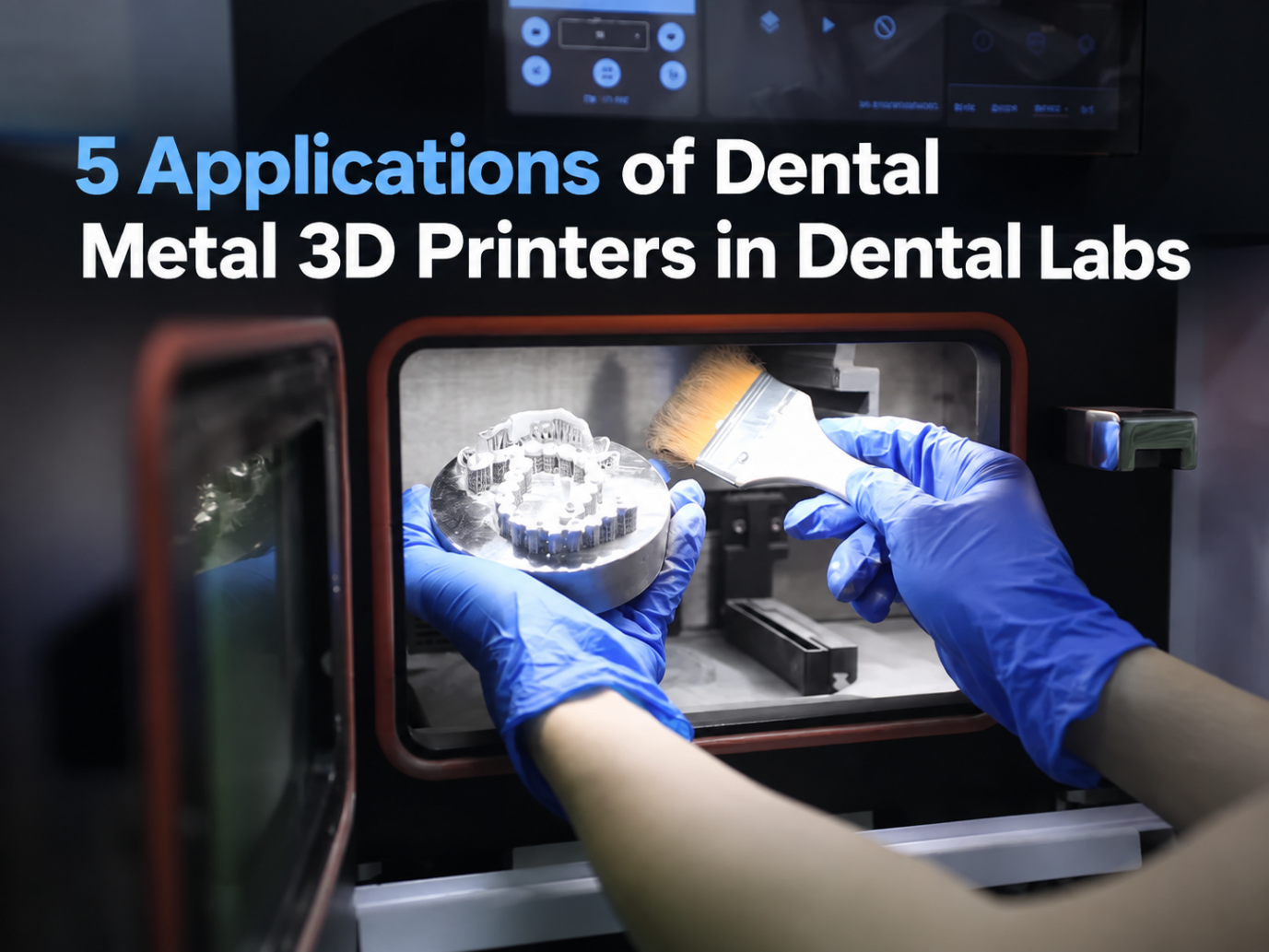
Traditional dental manufacturing can involve multiple fabrication steps, material waste, and considerable manual intervention. Metal 3D printing changes the workflow by using selective laser melting (SLM) to build components layer by layer from digital files. This approach allows laboratories to produce customized metal restorations and frameworks without relying entirely on conventional subtractive processes.
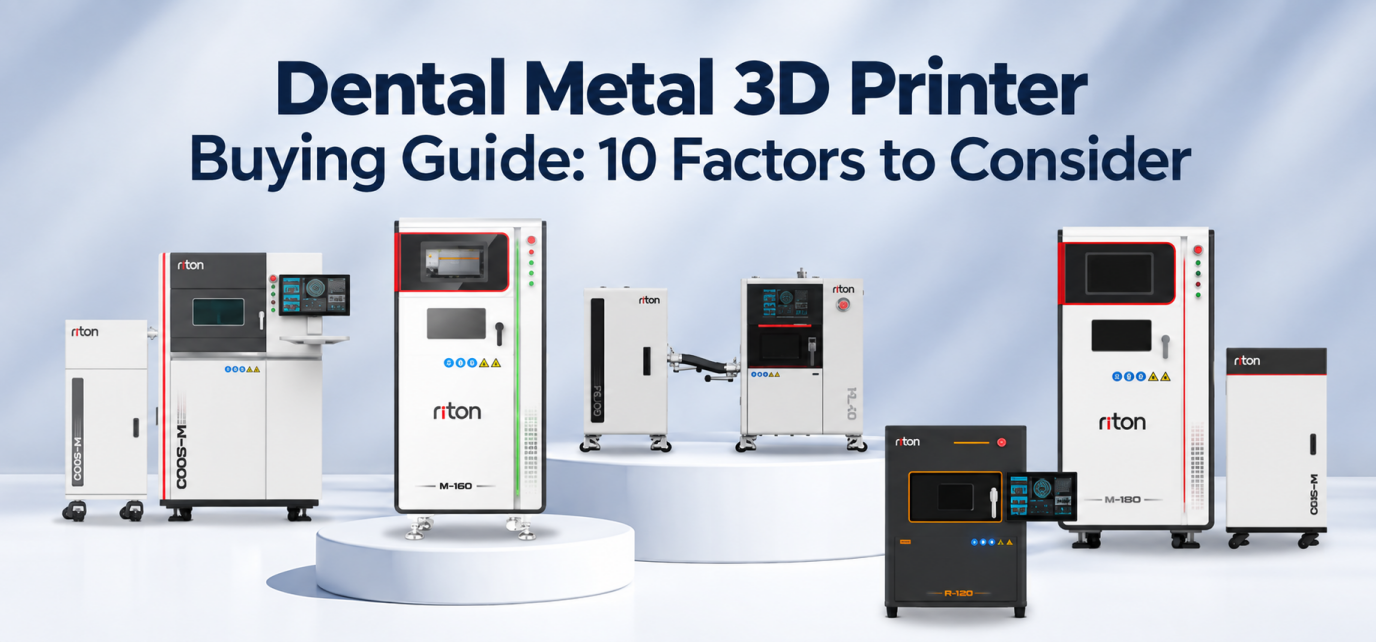
We develop our metal 3D printers specifically for dental production. Our portfolio includes MLAB, MCUBE, the M-150 Series, and M-200D, with compatible dental metal materials including CoCr and titanium alloys. This gives laboratories different equipment options according to their production volume, available space, and application requirements.
Higher Production Capacity for Growing Dental Labs
Crown and bridge production is rarely limited to one case at a time. Laboratories need equipment that can process multiple components efficiently while maintaining consistent production conditions. We therefore focus on balancing build volume, scanning performance, and workflow efficiency rather than pursuing one specification in isolation.
The M-150 provides a melting area of Φ150 × 140 mm, including the build plate, and uses a single fiber laser with output power of up to 500 W. Riton specifies a maximum scanning speed of 14,000 mm/s and a layer thickness range of 20–60 μm. These capabilities support batch-oriented dental metal production.
Efficient Crown and Framework Production
Production efficiency has a direct impact on laboratory capacity and turnaround planning. Our M-150 is specified to print up to 200 metal crowns or 17 frameworks in 4.5 hours. Actual production time can vary depending on material, build arrangement, printing parameters, and operating conditions, but the stated capacity demonstrates the system’s orientation toward production-scale dental workflows.
We also optimize the powder-spreading process through features including segmented variable speed, dual-cylinder lifting, and pre-powder spreading. Riton states that these improvements increase efficiency by at least 30% compared with similar 3D dental equipment. For laboratories, this can support more productive use of each printing cycle.
Stability Becomes Critical in Dental Production
Precision is not useful without repeatability. Crown and bridge manufacturing requires production equipment to maintain stable operating conditions across repeated builds. We therefore designed the M-150 with structural features intended to protect critical components and support long-term operational stability.
Its hidden sealed structure protects moving parts, while the equipment circuitry is separated from the powder-forming section. This design helps reduce exposure of key components to the powder environment and is intended to support long-term reliability. The M-150 also uses water cooling and sealed mechanics according to its current product documentation.
Automated Gas Management Reduces Production Interruptions
The printing environment is another important consideration when evaluating dental lab 3D printing equipment. Metal powder processing requires controlled protective-gas conditions, so laboratories need systems that can manage gas consumption without unnecessarily interrupting production.
Our M-150 incorporates an automated deoxidation logic strategy and dual gas supply system. Riton states that this combination reduces gas consumption and reduces waiting time when equipment needs to refill with gas. The printer supports nitrogen and argon as protective gases, helping laboratories maintain a controlled atmosphere during metal printing.
What 3D Metal Printer Companies Should Bring to Dental Labs
When we evaluate 3D metal printer companies, we believe dental laboratories should look beyond laser power and build volume. A complete solution should include compatible materials, application knowledge, auxiliary equipment, software, and technical support. These factors determine how effectively a printer can become part of everyday production.
Riton has specialized in dental additive manufacturing for decades. We launched China’s first metal 3D printer dedicated to dental restoration in 2016 and have continued expanding our ecosystem with metal and resin printers, dental materials, auxiliary equipment, and digital platforms. Our objective is to connect individual technologies into a more complete digital dental workflow.
Integrating Printing Into the Wider Dental Workflow
Metal printing does not operate independently from the rest of the laboratory. After printing, dental components may require processes such as heat treatment, surface finishing, or additional machining depending on the application. We therefore provide auxiliary equipment alongside our printers, including atmosphere furnaces and other metal-processing solutions.
Our RT-1300 box-type atmosphere furnace, for example, is designed as auxiliary equipment for Riton metal 3D printers and supports sintering under a protective atmosphere. It provides programmable heating curves and intelligent temperature control, helping laboratories build a more connected post-processing workflow around their additive manufacturing equipment.
Advancing Crown and Bridge Manufacturing
For us, the value of dental lab 3D printing lies in its ability to connect precision, productivity, and digital workflow management. The M-150 combines a substantial build area, high scanning speed, automated gas management, sealed structural design, and dental-oriented production capacity to address several requirements simultaneously.
As dental laboratories continue increasing their digital production capabilities, we believe the role of 3D metal printer companies will extend beyond supplying machines. The capable technology partners will help laboratories build integrated manufacturing systems that connect printing, materials, post-processing, and production expertise. Our M-150 reflects this approach, providing a practical foundation for more efficient crown and bridge manufacturing.