The use of photopolymerization in dental laboratories has grown significantly, enabling the production of models, surgical guides, occlusal splints, denture bases, and a range of customized devices. Consequently, the selection of a dental resin 3D printer system represents a critical production decision rather than a routine capital acquisition.
Critical assessment criteria include dimensional accuracy, build platform size, throughput speed, resin formulation compatibility, post-processing infrastructure, digital workflow alignment, and the quality of technical support. Ideally, the selected system should satisfy present clinical and technical demands while accommodating anticipated business growth and evolving application requirements.
What Should We Expect from the Liquid Resin 3D Printer?
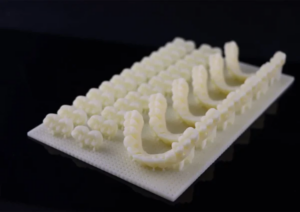
Liquid resin printing uses photosensitive resin that cures when exposed to specific ultraviolet light. The printer builds the model layer by layer through photopolymerization. This process makes resin printing well suited to dental applications where fine details, customized geometries, and surface quality matter.
When comparing the best liquid resin 3D printer options, we should first identify what we actually produce. A laboratory focused on high-volume models may prioritize molding size and throughput, while a clinic-oriented workflow may place greater emphasis on footprint, ease of operation, and consistent results.
Riton’s current resin printer range includes the RXDent-L230, RXDent-D130 and RXDent-L130 Ultra. The RXDent-L230 is positioned for high precision, larger-scale production and speed, while the RXDent-D130 focuses on stability and intelligent production quality. This gives us a useful starting point for matching equipment to different business requirements.
Check Resolution, Build Size, and Production Requirements
Specification sheets deserve careful attention because different numbers answer different questions. Pixel size, resolution, molding size, and printing speed should be considered together rather than treated as interchangeable measures of quality.
For example, Riton lists the RXDent-L230 with a molding size of 228 × 128 × 150 mm, a 30 μm pixel size, and 7680 × 4320 resolution. These specifications indicate a platform designed to balance detailed dental production with a relatively substantial build area.
For us, the right build size depends on typical nesting patterns and daily order volume. A larger build area can be useful for batch production, but we should not pay for capacity that our workflow rarely uses. We should calculate expected jobs per batch and compare that with actual production demand.
Match the Resin to the Dental Application
Printer compatibility is only half of the equation. The resin itself needs to be appropriate for the intended application. Our dental resin portfolio includes materials for dental models, surgical guides, gingiva masks, casting wax, IBT, splints, try-ins, denture bases, trays, crown bridges, crowns, and denture teeth.
We should therefore select a printer ecosystem with a sufficiently broad material portfolio. For example, Riton Model V1.0 is designed for dental models and is compatible with LCD/DLP equipment using 385–405 nm wavelengths. It is offered in 1 kg bottles and has NMPA, FDA, and CE certifications according to Riton’s product page.
This application-specific approach helps us avoid treating every resin as a generic consumable. Mechanical properties, surface characteristics, dimensional stability, intended use, and certification can all affect whether a material is appropriate for a particular dental workflow.
Evaluate the Complete Dental Resin 3D Printer Workflow
A printer should also make the entire production process manageable. Riton describes a typical UV-curing workflow in four stages: filling the resin tank, layer-by-layer printing, post-processing, and final finishing.
After printing, models can be cleaned with isopropyl alcohol and cured under UV light. Supports are then removed and surfaces can be smoothed as required. For us, these steps are important because post-processing labor can influence the real production cost just as much as printer speed.
We should therefore evaluate the printer together with washing, curing, support removal, and finishing procedures. A machine that prints quickly but creates a complicated post-processing burden may not deliver the expected productivity improvement.
Consider Stability, Support, and Long-Term Scalability
Production reliability becomes increasingly important as resin printing moves from occasional prototyping into daily dental manufacturing. We need stable equipment, repeatable materials, straightforward operation, and accessible technical support.
The resin printers are developed specifically for dental applications, with an emphasis on high-speed printing, high finished-product precision, and surface quality. The company also provides printer operation and post-processing training, online technical support, and on-site repair services.
This broader support model matters to us because successful implementation depends on more than hardware. Training can shorten the learning curve, while technical support can help laboratories address operational problems without unnecessarily disrupting production.
Build the Right Resin Printing Investment with Riton
Choosing the right machine starts with our applications, not a generic ranking. We should identify our required products, expected batch sizes, acceptable post-processing time, resin requirements, available workspace, and future production plans before comparing equipment.
Riton combines resin 3D printers with a dental-specific resin portfolio covering numerous clinical and laboratory applications. Its broader ecosystem also includes metal 3D printers, auxiliary equipment, software platforms, and digital dental solutions.
For laboratories seeking a capable dental resin 3D printer, this integrated approach can simplify equipment and material selection while supporting workflow expansion. By evaluating printer specifications, resin compatibility, production economics, and service together, we can make a more informed investment and build a scalable digital dental manufacturing operation.
Contact us to discuss your application requirements, request material recommendations, or explore customized digital dental solutions tailored to your laboratory.