Dental production is no longer limited to rigid models and metal frameworks. As digital workflows expand, laboratories increasingly need materials that can reproduce precise geometries while providing controlled flexibility for specific applications. We believe the value of a resin 3D printer is best understood through its intended use rather than the word “flexible” alone. For dental businesses, the right combination of printer, resin, software, and post-processing can make digital production more practical and scalable.
Why Flexibility Matters in Dental Production
Flexible resin should be distinguished from rigid resin based on material properties. Rigid materials are useful when dimensional stability and surface hardness are priorities, such as dental models. Flexible materials serve different requirements where resilience, rebound, fatigue resistance, or controlled deformation are important.
This distinction matters when selecting a dental resin 3D printer. At Riton, we provide a variety of materials for dental models, surgical guides, gingiva masks, casting wax, IBT, splints, try-ins, denture bases, trays, temporary models, crowns, and denture teeth. This application-specific approach allows us to match material properties to the production objective rather than treating every resin workflow the same way.
Flexible Denture Bases Are a Key Application
For laboratories producing removable prosthetics, flexible denture bases are one of the clearest applications for a resin 3D printer. These components need a combination of fit, resilience, and resistance to repeated mechanical loading. A material that is simply hard or highly detailed is not necessarily suitable for this workflow.
Riton Model F1.0 is specifically developed for flexible denture bases and removable prosthodontics. It offers rebound elasticity, high fatigue strength, fit, and a true-to-life transparent pink color. We supply the resin in 1 kg bottles, with a working wavelength of 385–405 nm, and it is compatible with LCD/DLP equipment. We also provide FDA and CE certifications for the material..
Material Properties Should Match the Application
When we evaluate a flexible material, we should examine measured properties instead of relying on broad marketing language. Model F1.0’s bending strength of 20–28 MPa and bending modulus of 630–740 MPa under ASTM D790. Its notched impact strength is 35–40 J/m under ASTM D256, while water absorption is ≤1.3% under ASTM D570.
The resin also has a Shore D hardness of ≥40 under ASTM D2240 and viscosity of 2,000–3,000 mPa·s under ASTM D2393. These figures help us understand the material’s mechanical profile and should be considered together with the intended indication, printer parameters, post-processing process, and applicable regulatory requirements.
A Dental Resin 3D Printer Needs the Right Resin Ecosystem
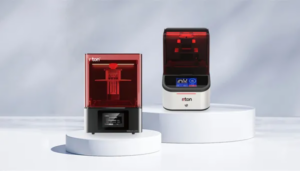
A flexible resin is only valuable when the printer can process it consistently. We therefore recommend evaluating the printer and material as one system. Riton’s resin printers use UV curing technology, where liquid photosensitive resin is selectively cured layer by layer to form the final model or component.
We offer the RXDent-L230 and RXDent-D130 resin 3D printers. The L230 provides a 228 × 128 × 150 mm molding size and 30 μm pixel size, while the D130 provides a 130 × 70 × 120 mm large molding size. Choosing between systems should depend on production volume, required detail, available space, and the materials and applications we plan to run.
Post-Processing Is Part of the Workflow
For dental laboratories, print quality cannot be separated from post-processing. After resin printing, Riton’s workflow describes cleaning the printed part with isopropyl alcohol and curing it under UV light, followed by support removal and surface finishing where required.
We should establish standardized procedures for washing, curing, support removal, and inspection because these steps can affect the final characteristics of printed parts. For production teams, consistent post-processing is especially important when we want repeatable results across multiple cases and operators.
Look for a Supplier That Supports the Whole Workflow
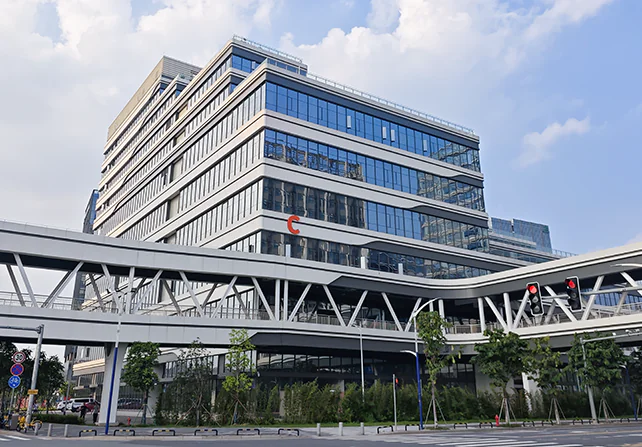
When we compare dental 3D printing suppliers, we should look beyond the printer specification sheet. A capable partner should help us connect equipment, materials, training, and technical support. Riton has been developing laser and dental technologies since 1997 and launched China’s first metal 3D printer dedicated to dental restoration in 2016.
Today, Riton provides metal and resin 3D printers, dental-specific resin and metal materials, software platforms, auxiliary equipment, and professional services. Its service offering includes equipment consultation, site and space planning, installation support, professional training, and after-sales service. This ecosystem approach can reduce the complexity of building a digital dental production line.
Choose Flexibility for the Right Dental Workflow
A resin 3D printer is not a universal replacement for rigid dental resins. Its value comes from applications where elasticity, fatigue strength, impact resistance, and fit are important. Flexible denture bases are a clear example, while other applications should be selected according to validated material requirements rather than assumed suitability.
At Riton, we combine dental-focused resin printers with application-specific materials and technical support. Our solutions help laboratories select suitable materials and equipment for different dental applications. For dental businesses planning to expand digital production, we recommend starting with the application, then selecting the material, printer, and workflow around it.