Orthodontic labs and clinics face a practical production question: should technicians continue shaping wires manually, or move toward automated bending? Manual bending remains useful for learning, adjustments, and low-volume work, but digital orthodontic workflows increasingly demand repeatability, speed, and traceable production.
At Riton, we approach this question from a broader digital manufacturing perspective. As a dental 3D printing solutions provider, we connect metal and resin printing with automated wire bending and digital design to help professional teams build more consistent workflows.
Manual Bending: Flexible but Dependent on Skill
Manual wire bending gives experienced technicians direct control over the material. Using hand instruments, they can make adjustments according to a specific appliance and respond immediately when a shape needs correction. For occasional jobs or highly individualized modifications, this flexibility can still be valuable.
The limitation is consistency. Results can depend heavily on technician experience, hand pressure, bending sequence, and repeated adjustments. Training and rework can also consume valuable technician time when the same design must be reproduced repeatedly.
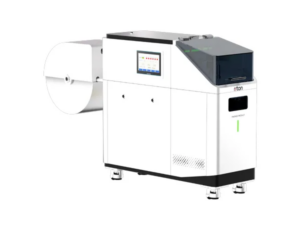
For business operations, that dependence can make scheduling and output more difficult to standardize across operators or production shifts. By contrast, automated bending delivers a different outcome: for regular workpiece bending, Riton’s automatic orthodontic steel wire bending machine WBM-V2 can complete tasks in under 60 seconds while maintaining a more standardized production process. The difference becomes increasingly important when laboratories handle repeat orders or higher production volumes.
Why Wire Bending Machines Improve Production Consistency
We see automation as more than a way to reduce bending time. It creates a more controlled link between digital design and physical production. Riton’s WBM-V2 supports wire diameters from 0.5 to 1.0 mm, with feeding accuracy of ±0.05 mm and bending repeatability of ±0.5°. These specifications give production teams measurable parameters instead of relying primarily on operator technique.
The WBM-V2 also integrates with Riton Cloud and OrthoWireLab. Design data can be transmitted directly to the equipment, while the software uses intelligent algorithms for personalized archwire shapes and optimized path planning. This digital connection can reduce repeated manual data handling and make the manufacturing process easier to manage across multiple orders.
Speed also matters for business dental production. Riton states that the WBM-V2 can complete a device in less than 15 minutes, with efficiency increased by more than 50%. Its six-axis coordinated motion and PLC plus multi-axis servo control are designed to support positioning accuracy and repeatability. For laboratories seeking predictable throughput, these capabilities can make automation more scalable than manual bending.
How Leading 3D Printer Manufacturers Fit the Bigger Digital Workflow
We believe wire bending should not be considered in isolation. Modern dental production increasingly connects design, manufacturing, materials, and equipment into one workflow. That is why leading 3D printer manufacturers are increasingly relevant to conversations about automated orthodontic production: the value comes from integrating multiple digital processes rather than replacing one manual task.
At Riton, our ecosystem combines metal and resin 3D printers, automatic wire bending machines, clinical-grade materials, and proprietary cloud design platforms. Our product portfolio includes metal 3D printers such as M-150 and MLAB, resin 3D printers including RXDent-L230, RXDent-L130 Ultra, RXDent-D130, and the WBM-V2 automatic orthodontic steel wire bending machine. This combination supports workflows where wire bending and base printing can be coordinated from design through assembly.
Manual bending may still have a place within a professional laboratory. However, when production volume, repeatability, labor efficiency, and digital traceability become priorities, automation offers a stronger foundation. The decision should therefore be based on the laboratory’s production model rather than on whether manual techniques are inherently outdated.
Choosing the Right Approach for Orthodontic Production
For small-volume operations, manual bending can remain practical when skilled technicians are readily available and frequent design changes are expected. It requires less equipment investment and can be appropriate for straightforward adjustments or training environments.
For growing dental labs and clinics, the calculation changes. Automated wire bending can reduce dependence on individual operator technique, accelerate repeated production, and connect digital design with manufacturing. Riton’s WBM-V2 is designed specifically for removable orthodontic appliances and can produce applications including Hawley retainers, Begg retainers, lingual bars, space maintainers, Nance appliances, tongue shields, and other structures.
Our Perspective on the Next Step in Orthodontic Manufacturing
We do not view manual bending and automation as mutually exclusive technologies. Manual skills remain important for professional understanding and specialized adjustments, while automation becomes increasingly valuable when a business needs repeatable quality and efficient production.
For orthodontic labs and clinics planning a scalable digital workflow, wire bending machines offer clear advantages in speed, measurable precision, repeatability, and software integration.
At Riton, we combine these capabilities with dental 3D printing, materials, and digital platforms to support a more connected production environment. For businesses preparing to expand digital orthodontic manufacturing, that integrated approach can be more valuable than simply replacing one manual tool with one automated machine.